 Orbiont
Winter arc: how to do it right
A winter arc is a season where you stop drifting and decide what you want. Here is a complete, practical way to run one, with a checklist you can use today.
- Use the long winter nights to think clearly about your goals. That thinking is the most important part.
- Do one hard thing you do not like, every day. The harder it is, the more it trains you.
- It should be hard, but not extreme and not forever. Pick an end date.
- Track it daily and review it weekly, so you can see that it is working.
What a winter arc actually is
A winter arc is a deliberate stretch of the cold months where you commit to changing something about your life. You focus on a small number of goals, you do a hard daily practice, and you stop letting days blur together.
It is not a punishment, and it is not about looking impressive online. It is a season you choose to use well, with a clear start, a clear end and a clear reason.
Why winter is the best time for it
Winter is mostly night. You go outside less, there are fewer things pulling at you, and you simply do fewer things. That quiet is the whole point: it leaves room to think.
Most people never spend time thinking properly about what they want, because there is always something else to do. Winter gives you the space. Use it on your goals before you use it on any routine.
It is really important that you do it in the winter. It is mostly night, so you are not doing as many things and you have more time to think about your goals.From the person who built Orbiont
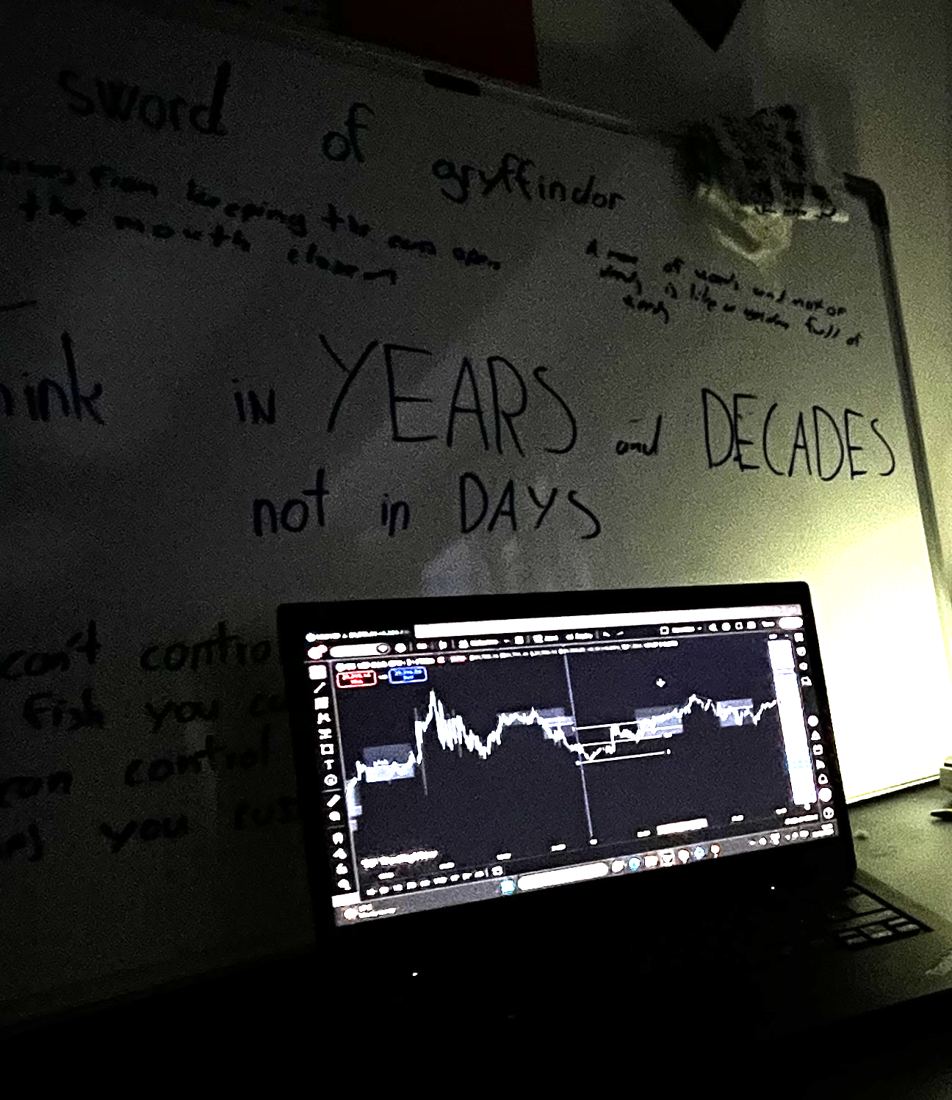
Spend your first week mostly thinking and writing, not just doing. A hard routine without a goal is only suffering. A hard routine for a goal you chose is training.
Step 1: decide what you want
Before you pick any routine, sit down with a pen and answer these questions honestly. Do not rush. Write more than one sentence for each.
- What do I want my life to look like a year from now?
- What is the one thing that, if I achieved it this winter, would make everything else easier?
- Why do I want it? Would I still want it if nobody ever knew?
- What am I currently doing that works against it?
- What am I willing to give up for it?
Then turn your answer into one defined goal. If it is vague, the next steps will not work. Our guide on how to achieve your goals walks through it, and the goal builder there does it in a minute.
Step 2: choose your one hard daily thing
This is the heart of a winter arc. Pick one thing you do not enjoy and do it every day, without negotiating. The harder it is, the better, because the point is to prove to yourself that you do what you said you would do, even when you do not feel like it.
A good hard thing is
- Specific. "Run" is vague. "Run 20 minutes at 6am" is not.
- Daily. Doing it every day removes the daily decision.
- Uncomfortable, not harmful. It should stretch you without hurting you.
- Within your control. It does not depend on other people.
Examples people use
For the person who built Orbiont, the hard thing was waking up at 4am, going for a run and then taking a cold shower. That worked for them. Yours should fit your life, not copy theirs.
Step 3: make the rules simple
Decide the rules once, then stop thinking about them.
- Write an if-then plan. "If it is 6am, then I put on my running shoes." A trigger removes the decision.
- Set a minimum version for very bad days, for example five minutes. Doing the minimum keeps the streak and the habit alive.
- Prepare the night before. Clothes out, alarm set, phone across the room.
- Tell one person. Saying it out loud makes it harder to quietly quit.
Missing one day is normal. Missing two in a row is how a streak ends. If you miss a day, do the minimum version the next day, no drama.
Step 4: track daily, review weekly
What you can see, you can keep doing. Tick it off every day, and once a week sit down for ten minutes and answer:
- Did I do my hard thing most days? If not, what got in the way?
- Did I move my goal forward this week? What is the next small step?
- Is the hard thing still the right hard thing, or does it need to change?
- What is one thing I will do differently next week?
In Orbiont you can add the hard thing as a habit so the streak is visible, put your goal on the goal map with dates, and use focus sessions for the work that matters.
Make it hard, but not forever
A winter arc is not meant to be sustainable for years. Keep it hard, but do not push it to an extreme for a very long time. It is a season, not your whole life.
Build up gradually. If your hard thing involves less sleep, intense exercise or cold exposure, do not cut your sleep to the bone, and check with a doctor first if you have any health concerns. Rest is part of the plan, not a failure of it.
Choose when your arc ends, for example the first day of spring, and decide in advance what you will keep. Many people keep one or two practices and drop the rest.
Common mistakes
| Mistake | What to do instead |
|---|---|
| Starting with a huge routine | Start smaller than you think. Add difficulty each week. |
| No clear goal | Spend the first week on thinking and writing your goal. |
| Copying someone else’s routine | Choose a hard thing that fits your own life and goal. |
| Cutting sleep too much | Protect your sleep. Tired people quit. |
| Quitting after one missed day | Do the minimum version and keep going. Never miss twice. |
| Never reviewing | Do a ten-minute review every week. |
Your winter arc checklist
Winter arc starter checklist
Tick these off. Your progress is saved on this device.
Questions people ask
How long should a winter arc last?
Most people run it for the cold months, around 8 to 12 weeks. Pick an end date at the start so it stays a season and does not turn into burnout.
When should I start my winter arc?
You can start whenever the days shorten for you. Many people start in late autumn so they are settled before the darkest weeks. Starting today is better than waiting for the perfect day.
Do I have to wake up at 4am?
No. Waking at 4am was one person’s hard thing. Your hard thing can be any daily task you find difficult, as long as it is specific, safe and sustainable for a season.
What if I miss a day?
Do the minimum version the next day. One missed day is normal. The rule is to never miss twice.
Are cold showers safe?
They are not right for everyone. Start gradually, never force it, and speak to a doctor first if you have a heart condition, high blood pressure or any health concern.
How do I track a winter arc?
Use a habit tracker with a visible streak, plus a weekly review. In Orbiont you can add the habit, put your goal on the goal map and track both in one place.
Run your winter arc in Orbiont
Put your goal on the goal map, add your hard thing as a habit and watch the streak. Free to start, on the web and on your phone.
Try Orbiont Studio free